
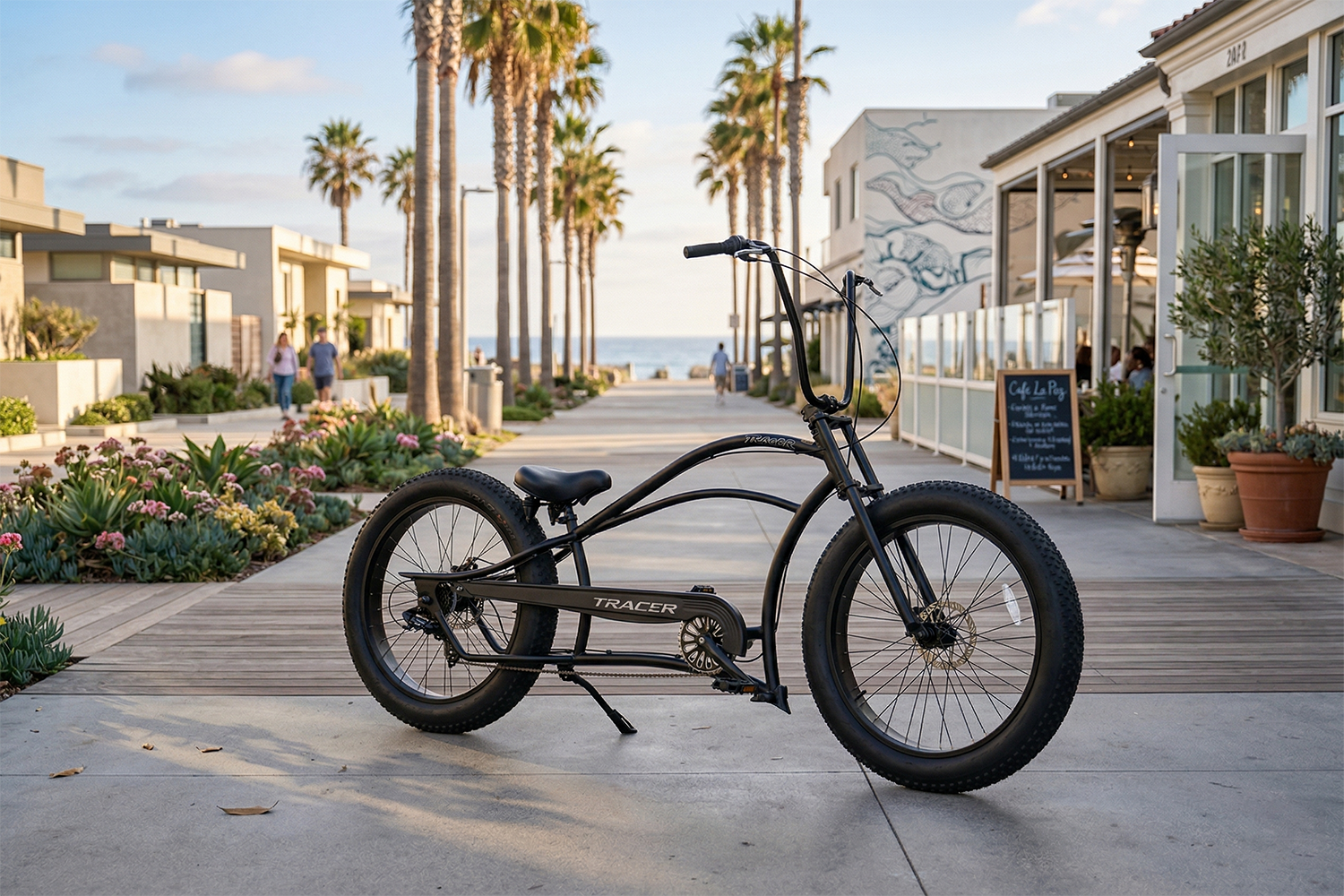
What Is a Stretch Cruiser Bike? The 2026 Complete Buyer's Guide
Imagine gliding along a coastal boardwalk with your legs stretched forward and your body in a relaxed position. This is a typical riding experience on a stretch cruiser bike. Unlike traditional bicycles, which often place riders in a more forward-leaning posture, these elongated designs are built for comfort and a more relaxed ride.
As commuting and recreational riding evolve, more riders are choosing bikes that prioritize comfort and style over aggressive performance. Stretch cruiser bikes reflect this shift by combining chopper-inspired design with the simple mechanics of a classic bicycle.
Whether you want to reduce lower back strain on weekend rides or prefer the look of a longer frame (typically around 80–85 inches), understanding geometry, frame materials, and drivetrain options is key. This guide covers the essential features, sizing considerations, and specifications to help you choose the right bike.
What Is a Stretch Cruiser Bike?
A stretch cruiser bike is defined by its extended wheelbase and forward pedal position. On a standard city commuter, the pedals are located almost directly below the saddle. This standard geometry allows for aggressive power transfer but places the rider's body weight squarely on their wrists, shoulders, and lower lumbar spine.
A stretch cruiser bike radically alters this layout. By extending the frame's top and down tubes, manufacturers increase the total wheelbase—the distance between the front and rear axles—from roughly 40–45 inches to approximately 48–52 inches. More importantly, based on typical cruiser bike geometry, the bottom bracket (the mechanism that holds the pedals) is shifted 10 to 15 inches forward relative to the seat post.
This forward-pedaling geometry transforms the rider's posture. Instead of pushing down on the pedals, you push forward. Your body sits in a reclined, "laid-back" position, significantly reducing pressure on the wrists and shifting your center of gravity down and back toward your glutes. Because of this elongated stance and low center of gravity, the bike tracks in a perfectly straight line, completely eliminating the "twitchy" steering often experienced on shorter road bikes.
If you're comparing riding positions, it helps to understand how cruiser bikes differ from standard bicycles. See our guide on What is the Difference Between a Cruiser Bike and a Regular Bike? for a full breakdown.
Standard Cruiser vs. Stretch Cruiser Geometry
|
Specification |
Standard Beach Cruiser |
Stretch Cruiser Bike |
|
Average Wheelbase |
42 – 45 inches |
48 – 52 inches |
|
Total Bike Length |
~70 inches |
Typically 80 – 85+ inches |
|
Bottom Bracket Position |
2 – 4 inches forward of seat |
10 – 15 inches forward of seat |
|
Riding Posture |
Upright, 90-degree spine |
Reclined, 100-to-110-degree spine |
|
Average Frame Weight |
35 – 40 lbs |
45 – 60 lbs (Manual) |
(Note: Measurements are ranges based on typical cruiser bike geometry and industry averages).
Still deciding which style fits your riding needs? This comparison guide on Cruiser Bikes vs. Regular Bikes: Choosing the Right Ride for Your Lifestyle can help you choose based on comfort, usage, and terrain.
Key Features of the Stretch Frame Design
When evaluating a long wheelbase bike, the aesthetic appeal is obvious, but the underlying mechanical features are what dictate its performance on the pavement.
Stretch cruiser frames are typically built for strength and stability. According to industry data, high-quality models utilize High-Tensile (Hi-Ten) steel, which typically results in a base frame weight of 45 to 60 lbs. This added mass acts as a natural shock absorber. When a heavy steel frame hits a pavement crack, helps reduce the amount of vibration felt by the rider.
Fat Tires and Low-Pressure Riding Almost every modern stretch cruiser relies on oversized "fat tires," typically measuring between 3.0 and 4.0 inches wide on 26-inch or 29-inch rims. Unlike road bike tires that require 80 to 100 PSI (Pounds per Square Inch), cruiser fat tires are designed to run at a plush 15 to 20 PSI. This low-pressure volume creates a cushion of air that flattens out over gravel, sand, and potholes, providing a cushioning effect similar to basic suspension without the need for complex mechanical shocks.
Wondering why fat tire bikes can feel slower to pedal? Learn more in Fat Tire Beach Cruiser Bike: Hard to Pedal? where we break down rolling resistance.
High-Rise "Moon' Handlebars To accommodate the rearward seating position, these bikes utilize sweeping, high-rise handlebars (often spanning 29 to 33 inches wide). This wide grip forces the rider's chest to open up, which helps improve posture and provides maximum leverage to turn the heavy 3.0-inch front tire at low cruising speeds of 10 to 15 mph.
Types: Standard vs. Electric Stretch Cruiser Bikes
The market is currently split between traditional, muscle-powered cruisers and high-voltage electric models. Selecting the right type “depends on your terrain and riding distance
1. The Standard (Manual) Stretch Cruiser
Manual models focus on simplicity and low maintenance.
Common setups include:
- Single-speed drivetrain (typically around 44T front / 20–22T rear)
- Or entry-level multi-speed systems (such as a 7-speed Shimano Tourney)
Without motors or batteries, maintenance is minimal—usually limited to chain lubrication and tire pressure checks.
A model like the Tracer Master 29" Chopper Stretch Cruiser serves as a representative example. It features a Hi-Ten steel frame and a triple-tree fork, designed to handle higher loads. With 29×3.0" tires and a sealed cartridge bottom bracket, it is suitable for casual urban or boardwalk riding.
It also uses a coaster brake (pedal backward to stop), which keeps the setup simple and cable-free.
2. The Electric Cruiser Bike (E-Cruiser)
Due to their weight (often 50 lbs or more), manual stretch cruisers can feel challenging on moderate inclines. Electric models address this by adding motor assistance.
Typical configurations include:
- 48V battery systems
- 500W–750W rear hub motors (common in the U.S. market)
For example, the Tracer Chico GT7 uses a 48V 750W hub motor paired with a 48V/20Ah battery. Range can reach up to 65–80 miles under ideal conditions, depending on rider weight, terrain, and assist level.
Because of higher speeds and weight, electric models are typically equipped with disc brakes. A common setup includes 180mm front and 160mm rear rotors, which provide stronger and more consistent stopping performance.
Who It’s For: Sizing and Use Cases
Stretch cruiser bikes are not one-size-fits-all. Due to the forward pedal position (typically 10–15 inches ahead of the seat), rider inseam is especially important.
According to industry data:
- Most 26" and 29" models fit riders approximately 5'3" to 6'4"
- Proper leg extension is key for comfortable pedaling
Riders with shorter inseams may have difficulty completing a full pedal rotation safely.
Rider Height & Wheel Size Matrix
|
Rider Height |
Recommended Wheel Size |
Best For |
|
5'0" – 5'4" |
20-inch to 24-inch wheels |
Smaller adults, teenagers, strict urban commuting. |
|
5'3" – 6'0" |
26-inch wheels |
The industry standard. Balances aesthetics with maneuverability. |
|
5'10" – 6'5" |
29-inch wheels |
Taller riders with inseams over 32 inches; maximum rolling momentum. |
The Ideal Use Cases:
- The Coastal Cruiser: If your primary riding environment is flat beachfront bike paths, a beach cruiser bike excels. The fat tires float over loose sand that blows onto the boardwalk, and the single-speed drivetrain prevents salt air from corroding complex gears.
- The Urban Statement Commuter: For riders in grid-plan cities with flat roads, an elongated bike serves as a highly visible commuter vehicle. The typically 80-plus inch length forces cars to give you a wider berth in bike lanes simply due to your physical footprint.
- Joint-Pain Sufferers: Riders with chronic lower back or wrist pain benefit from the 110-degree reclined seating angle, which completely removes body weight from the upper extremities.
The Definitive Buying Guide: Specs to Look For
If you are investing in a stretch cruiser bike, looking past the paint job and analyzing the raw specifications is crucial.
1. Frame Construction
Avoid cheap, thin-walled aluminum if the bike is over 75 inches long. Aluminum frames may require additional reinforcement on longer designs. Look for High-Tensile (Hi-Ten) steel or Chromoly steel. While steel adds weight to the frame, it offers superior tensile strength and naturally dampens road vibration.
2. Braking Systems
For a single-speed bike ridden under 12 mph on flat terrain, a standard rear coaster brake (like a KT Coaster) is perfectly adequate and reduces maintenance. However, if the bike features a 7-speed derailleur (like a Shimano Tourney) or an electric motor capable of speeds exceeding 15 mph, disc brakes are strongly recommended. Look for minimum 160mm steel rotors (with 180mm commonly preferred for the front) to ensure adequate stopping leverage against the heavy 3.0-inch tires.
Not sure which braking system is right for you? Our guide on Choosing the Right Brakes: Hand Brakes vs. Coaster Brakes on Stretch Cruiser Bikes explains the differences in more detail.
3. Fork Style
Triple-Tree vs. Dual-Spring You will typically find two types of front-end suspensions on these bikes:
- Triple-Tree Froks: Borrowed from motorcycle engineering, these forks use two rigid metal plates to clamp the fork tubes to the frame's head tube. This setup increases steering stiffness, preventing the high-speed "speed wobble" common on stretched frames.
- Dual-Spring Forks: These feature heavy-duty coil springs mounted near the head tube. When the front tire hits a pothole, the springs compress by 1 to 2 inches, mitigating the impact shock that would otherwise travel up the handlebars.
Pros and Cons of a Stretch Cruiser Bike
To make an informed decision, you must weigh the mechanical benefits against the daily logistical realities of owning an oversized bicycle.
The Advantages
- Unmatched Ergonomics: The forward-pedaling geometry eliminates compression on the lumbar spine and removes the majority of body weight from the wrists and shoulders.
- Gyroscopic Stability: The heavy, 26x3.0" wheels and roughly 50-inch wheelbase create increased gyroscopic stability. At speeds above 10 mph, the bike tends to remain stable at cruising speeds and travels in a perfectly straight line, minimizing steering effort.
- Aesthetic Impact: Chopper-inspired geometry, wide triple-tree forks, and massive frame profiles make these bikes highly visible in traffic, increasing rider safety through sheer presence.
The Drawbacks
- Incline Difficulty: A 50 to 60 lb manual steel bike requires significant leg torque to pedal uphill. Gradients exceeding 5 degrees are exhausting without an electric motor or geared drivetrain upgrade.
- Tight Cornering: You cannot execute sharp, 90-degree turns at high speeds. The elongated wheelbase requires a wider turning radius, similar to steering a long truck versus a compact car.
Maneuvering, Transporting, and Storing
Competitors often sell the visual appeal while ignoring the reality of owning an 80-plus inch bicycle.
- Storage: You cannot hang a 60-lb stretch cruiser vertically on a standard drywall hook. It requires 7 to 8 feet of linear, ground-level floor space in a garage or secure hallway.
- Transport: These bikes will typically not fit on a standard trunk-mounted strap rack or roof rack. Transporting a stretch cruiser requires a heavy-duty, hitch-mounted tray rack rated for at least 60 lbs per tray, with wheel cradles that can accommodate a 50+ inch wheelbase and 4.0-inch fat tires.
Conclusion
A stretch cruiser bike is much more than a visual statement; it is a complete re-engineering of traditional bicycle mechanics designed to prioritize posture, stability, and joint relief. By shifting the bottom bracket forward and elongating the frame, these bikes deliver a reclined, vibration-free ride that makes 15-mile urban commutes feel effortless.
If you plan to purchase one, remember these three actionable tips:
1.Check Your Inseam: Always match your height to the wheel size. Riders under 5'4" should look for 20-inch or 24-inch models, while 26-inch and 29-inch models are best reserved for riders 5'4" and taller.
2.Match Brakes to Speed: If you choose a 7-speed or electric model, insist on 160mm or 180mm disc brakes to safely halt the heavy frame.
3.Optimize Tire Pressure: Do not inflate fat cruiser tires to their maximum rating. Keep them between 15 and 20 PSI to utilize the tire's air volume as a natural suspension system against cracked pavement.
FAQ
1.Are stretch cruiser bikes hard to ride?
No, they are generally stable once in motion. The longer wheelbase and wider tires help improve stability at typical cruising speeds. The main adjustment is learning to take wider turns.
2.Are they good for tall riders?
Yes, they are generally well-suited for taller riders. Models with 29-inch wheels typically provide more legroom, and the forward pedal position allows for better leg extension compared to standard bikes.
3.Can you convert a manual stretch cruiser to electric?
Yes, many riders convert them using aftermarket kits. Most steel frames can accommodate rear hub motors (commonly 500W–1000W), but upgrading to disc brakes is strongly recommended for safety.
4.What is the weight limit on these bikes?
According to industry data, many stretch cruisers support approximately 250–400 lbs, depending on frame design and components. Always check the manufacturer’s specifications.
5.How do I transport a bike this long?
Due to their length (typically around 80+ inches), they may not fit standard racks or inside most vehicles. A hitch-mounted platform rack designed for longer wheelbases is usually recommended.
6.Do I need gears or is single-speed enough?
Single-speed setups are typically sufficient for flat terrain and low-maintenance riding. For hills or stronger headwinds, a multi-speed drivetrain (such as a 7-speed) is generally more suitable.