
Introduction
If you’ve ever seen a bicycle that looks more like a custom motorcycle than a traditional pedal bike, you’ve likely spotted a stretch cruiser bike. Riders choose these bikes for comfort rather than speed, as standard bicycles often force a hunched posture that strains the back and wrists.
A stretch cruiser bike extends the frame and moves the pedals forward, allowing an upright, relaxed riding position. Whether you want a single-speed for casual rides or an electric model for commuting, this guide covers the key geometry, specifications, and sizing you need before buying..
What Is a Stretch Cruiser Bike?
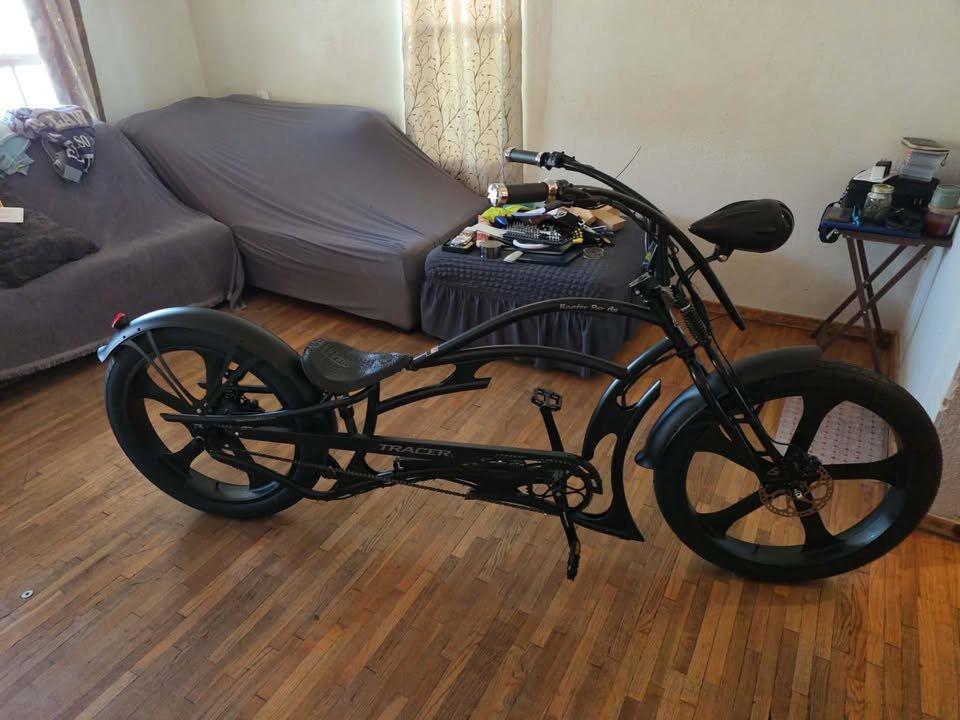
A stretch cruiser bike is a specialized subset of the traditional beach cruiser bike, characterized by an elongated frame, a lower center of gravity, and a dramatically extended wheelbase. While a standard bicycle typically measures around 65 to 70 inches from end to end, a stretch cruiser often exceeds 85 to 95 inches in total length.
The design takes direct visual and structural inspiration from the custom motorcycle culture of the 1960s and 1970s. This is why you will frequently hear them referred to as a "chopper bike" or a "low rider bicycle." The core engineering principle behind the stretch cruiser is the relocation of the bottom bracket (the point where the pedal crank arms attach to the frame). On a standard bike, the pedals sit directly below the saddle, forcing a downward pedaling motion. On a stretch frame, the bottom bracket is welded 10 to 15 inches further forward.
This forward-pedaling geometry fundamentally changes the riding mechanics. Instead of pushing down, you push forward. This completely removes the rider's body weight from the wrists and shoulders, placing the center of gravity squarely over the rear wheel. The resulting ride is exceptionally stable at cruising speeds of 10 to 15 mph, as the extended length acts as a natural shock absorber, dispersing road vibrations before they reach the rider's spine.
Key Features and Geometry of a Stretch Cruiser Bike
To understand why a long wheelbase bike handles differently than a standard commuter bicycle, you have to look at the raw specifications and structural design choices. You cannot simply lengthen a frame without upgrading the surrounding components to handle the altered physics.
The Hi-Ten Steel Frame
The vast majority of stretch cruiser bikes are constructed using High-Tensile (Hi-Ten) steel rather than lightweight aluminum. Because the frame span between the front and rear wheels is so wide, aluminum tends to flex or crack under heavy loads. Hi-Ten steel tubing, often measuring over an inch in diameter, provides the necessary structural rigidity to prevent the middle of the bike from sagging. This pushes the total weight of the bike to 45–60 lbs for non-electric models, but ensures the frame can safely support rider payloads of 300 to 400 lbs.
Triple-Tree and Dual-Spring Forks
Because the front wheel is pushed so far forward, the steering column requires reinforcement to prevent twisting. You will typically find two types of forks on a chopper bike:
- Triple-Tree Forks: Borrowed from motorcycle engineering, these forks use two rigid metal plates (the "trees") to clamp the fork tubes directly to the frame's head tube. This setup increases steering stiffness and prevents high-speed speed wobble.
- Dual-Spring Classical Forks: These feature heavy-duty coil springs mounted near the head tube. When the front tire hits a bump or a crack in the pavement, the springs compress by 1 to 2 inches, mitigating the impact shock that would otherwise travel up the handlebars.
Fat Tires and Oversized Wheels
Standard 2-inch bicycle tires do not provide enough traction or cushioning for a heavy stretch frame. Modern stretch cruisers utilize "fat tires," typically measuring 26 inches in diameter and 3.0 to 4.0 inches in width. Running these wider tires at lower tire pressures (around 15 to 20 PSI) creates a massive contact patch with the ground. This prevents the heavy bike from sinking into loose beach sand and provides pneumatic suspension when riding over uneven brick pathways or cracked asphalt.
Types of Stretch Cruisers: Standard vs. Electric Cruiser Bike
The stretch cruiser market is strictly divided by how the rear wheel receives its power: pure human pedal power versus motorized pedal assistance.
The Standard Manual Stretch Cruiser
Manual cruisers are built for simplicity, low maintenance, and purely recreational riding on flat terrain. They generally utilize a single-speed drivetrain paired with a coaster brake (a system where you pedal backward to engage the brake hub). Without the clutter of derailleur cables or brake levers, the handlebars remain visually clean.
For riders seeking this classic setup, the Tracer Master 29" Chopper Stretch Cruiser serves as an excellent benchmark for frame geometry. Built on a Hi-Ten steel chassis, it utilizes massive 29x3.0-inch balloon tires that increase top-end rolling momentum once you get the 55-lb bike moving. It uses a sealed NECO cartridge bottom bracket and a KMC rust-proof chain, meaning that for a rider doing standard urban or boardwalk cruising, the drivetrain offers an expected durability of 3 to 5 years with minimal maintenance beyond basic chain lubrication.
The Electric Stretch Cruiser Bike (E-Cruiser)
Because the elongated steel frames are inherently heavy, they are the perfect candidates for electric motors. An electric cruiser bike takes the strain out of getting the heavy frame moving from a dead stop and makes climbing coastal headwinds effortless.
For example, the Tracer Chico GT7 demonstrates how electric integration upgrades the stretch platform. Rather than a single gear, it utilizes a Shimano 7-speed derailleur for variable pedaling resistance. More importantly, it houses a 48V 750W rear hub motor. The addition of this motor allows riders to sustain speeds of 20 to 28 mph without breaking a sweat. However, because an e-cruiser traveling at 28 mph generates massive kinetic energy, coaster brakes are no longer safe. Therefore, models like the Chico GT7 upgrade to hydraulic disc brakes with 180mm front rotors, which compress brake pads against a steel disc using fluid pressure to stop the 106-lb bike in a fraction of the distance a coaster brake would require.
Who Is a Stretch Cruiser Bike For?
The unique geometry of a stretch cruiser bike dictates exactly who will benefit from it and where it should be ridden.
Rider Height and Sizing
Unlike road bikes that are sold in specific centimeter sizes (e.g., 54cm, 56cm), stretch cruisers are generally built as "one-size-fits-most" frames. Because of the forward bottom bracket, the distance from the seat to the pedals is exceptionally forgiving. Most full-sized 26-inch or 29-inch stretch cruisers are engineered to accommodate rider heights ranging from 5'3" to 6'4". If you are on the shorter side of that spectrum, the swept-back "moon-type" handlebars (often measuring 29 inches wide with a 9-inch rise) pull the grips backward toward your torso, eliminating the need to overextend your arms.
Ideal Use Cases
- The Coastal Cruiser: If your primary riding environment is flat beachfront bike paths or paved boardwalks, the long wheelbase bike shines. The 3.0-inch tires glide over sand scatter, and the upright posture allows you to look around and enjoy the scenery rather than staring at the pavement directly in front of your front tire.
- Riders with Joint Pain: For adults suffering from lower back pain, knee strain, or wrist fatigue, the forward-pedaling position reduces the sharp bend in the knee joint and completely unloads the upper body weight from the handlebars.
- The Urban Statement Commuter: For those living in grid-plan cities with flat roads, an electric stretch cruiser serves as a highly visible, head-turning commuter vehicle. The 85+ inch length forces cars to give you a wider berth in bike lanes simply due to your physical footprint.
The Ultimate Buying Guide for Stretch Cruiser Bikes
When you are ready to purchase a stretch cruiser, looking at the visual aesthetics is not enough. You must inspect the specification sheet for the following critical components to ensure the bike will survive heavy use.
1. Wheel construction and Spoke Count
The wheels bear the brunt of the heavy steel frame and the rider's weight. Standard bicycles use 32 or 36 spokes per wheel. For a stretch cruiser, look for heavy-duty wheels. Premium models will utilize 140-spoke rims laced with 13-gauge or 14-gauge steel spokes. This dense web of thick steel spokes prevents the rim from warping (going "out of true") under heavy cornering loads or when carrying riders over 250 lbs.
2. Gearing Options: Single-Speed vs. 7-Speed
- Single-Speed: Features a front chainring (usually 44T or 46T) and a single rear cog (usually 22T). This 2:1 gear ratio is perfect for flat ground under 10 mph. It requires zero maintenance but makes riding up even a 5-degree incline incredibly difficult due to the bike's weight.
- 7-Speed: Utilizes a rear derailleur (like a Shimano Tourney) and a cassette with gears ranging from 14T to 28T. This allows you to shift into a larger rear cog for easier pedaling uphill, and a smaller cog to maintain pedal resistance when coasting downhill at 15 mph.
3. Braking Systems
Never compromise on brakes with a heavy bicycle.
- Coaster Brakes (Foot Brakes): Acceptable ONLY for non-electric, single-speed cruisers riding on flat terrain at speeds under 12 mph.
-
Mechanical Disc Brakes: A steel cable pulls a caliper to squeeze the brake rotor. Minimum requirement for 7-speed manual stretch cruisers.
- Hydraulic Disc Brakes: Uses sealed fluid lines to multiply your braking force. This is a non-negotiable safety requirement for any stretch cruiser e-bike capable of exceeding 15 mph, as it provides the instant stopping power necessary to halt a 100+ lb motorized bicycle.
4. Motor and Battery Specs (For E-Bikes)
If buying an electric cruiser, ignore vague terms like "powerful motor." Look at the wattage and amp-hours. A 500W motor is sufficient for flat ground, but an 800W to 1000W rear hub motor is highly recommended for stretch cruisers due to their weight, ensuring you don't stall on inclines. For the battery, look for at least 48V and 15Ah to 20Ah capacity. Because heavy stretch bikes require more energy to move, a 48V/20Ah battery is necessary to achieve a real-world range of 40 to 60 miles on a single charge.
Pros and Cons of Riding a Long Wheelbase Bike
To make an informed decision, you must weigh the mechanical benefits against the logistical drawbacks of a chopper bike.
The Pros:
- Unmatched Ergonomicas: The 15-inch forward pedal placement completely eliminates wrist fatigue and lower back hunches.
- High-Speed Stability: The 80+ inch wheelbase prevents the "twitchy" steering feel common on short road bikes. Once the bike is moving, it naturally wants to travel in a straight line.
- High Payload Capacity: The combination of Hi-Ten steel tubing and fat 3.0-inch tires routinely allows for 350 to 400 lb payload capacities.
The Cons:
- Wide Turning Radius: Because the front wheel is pushed out via an angled head tube, you cannot make sharp 90-degree turns. You must execute wide, sweeping arcs, making tight city sidewalks difficult to navigate.
- Storage and Transport Issues: Measuring up to 8 feet in length and weighing over 50 lbs, a stretch cruiser bike will not fit on a standard car trunk bike rack, nor will it easily fit into a standard apartment elevator.
- Uphill Effort: Without electric assistance, attempting to pedal a 60 lb manual stretch cruiser up a steep hill is physically exhausting due to the upright posture, which prevents you from standing up and leveraging your body weight over the pedals.
Conclusion & Actionable Tips
A stretch cruiser bike is the ultimate statement in cycling comfort. By utilizing elongated Hi-Ten steel frames, forward bottom brackets, and 3.0-inch fat tires, these bicycles transform the act of riding into a relaxed, zero-impact experience. Whether you choose a minimalist single-speed setup or a 750W electric cruiser bike with hydraulic brakes, you are investing in a machine built for lifestyle rather than lap times.
3 Actionable Tips for New Stretch Cruiser Owners:
1. Measure Your Storage Space: Before purchasing, physically measure your garage or shed. Ensure you have a clear, straight 8-foot space, as maneuvering a long wheelbase bike around tight corners indoors is highly frustrating.
2. Monitor Tire Pressure: Because the bike is heavy, running the 26x3.0 tires too low (under 10 PSI) will cause "pinch flats" against the rim. Keep them inflated between 18 and 22 PSI for the perfect balance of shock absorption and puncture resistance.
3. Upgrade the Kickstand: If your bike does not come with a heavy-duty, center-mounted double kickstand, install one immediately. A standard single-leg side kickstand will frequently fail under the weight of an 85-inch steel frame.
1. Are stretch cruiser bikes hard to ride?
No, but they require a brief adjustment period. The extended front wheel makes steering slower, so you need to lean into wide turns instead of making sharp handlebar movements.
2. Are they good for tall riders?
Yes. The forward-pedal design prevents cramped legs, easily accommodating riders up to 6'4". Raising the seat on a stretch frame effectively increases both vertical and horizontal legroom.
3. Can you convert a manual stretch cruiser to an electric bike?
Yes, many frames have the 170mm rear clearance needed for a hub motor. However, you must upgrade your coaster brakes to disc brakes to safely stop the added weight and speed.
4. How do you transport a long wheelbase bike?
Standard car bike racks will not work for an 85+ inch steel frame. You will need a heavy-duty, hitch-mounted motorcycle carrier or a pickup truck to transport it safely.